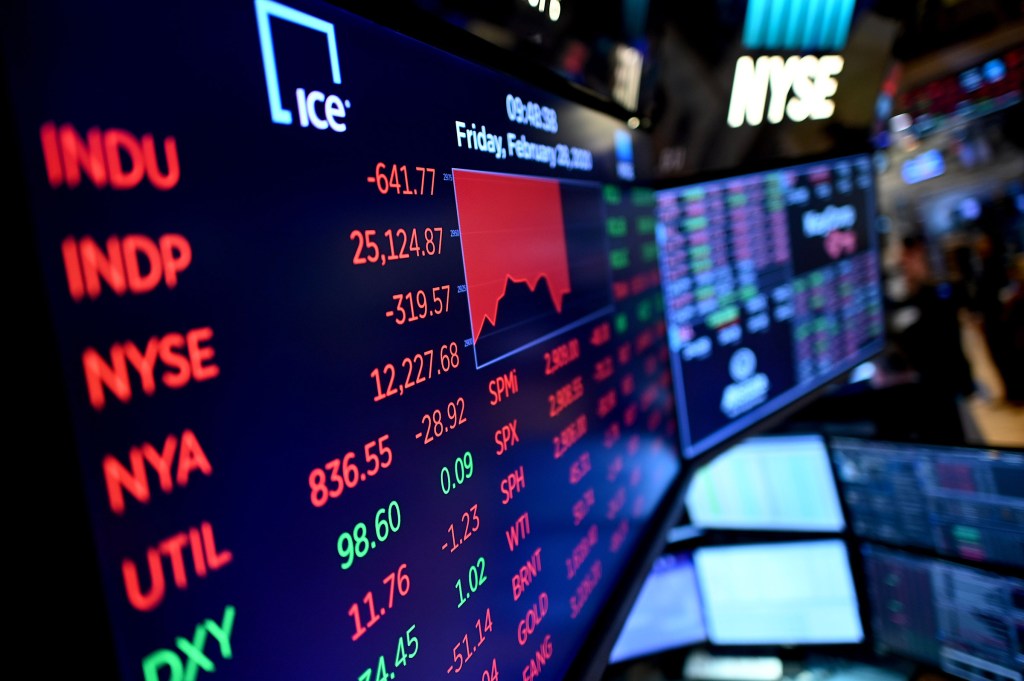
Stock market has zoomed up since the coronavirus pandemic started hitting India. The volatility of wild changes in stock indices in early March is now over. The only thing which is out of context is the entire stock market. Economy was in shatters in April-June quarter after lockdown. It seems to have recovered more in July but that still doesn’t justify the way market is moving upwards. Well, there are multiple reasons why its heading upwards.
1. The huge round of quantitative easing happening world over
This is most obvious reason for the rising stock market. Globally, many developed and developing countries have pumped in a lot of money into the system. This money is finding its way to the stock market. To put things into perspective, US Fed’s balance sheet size increased to 6.92 trillion dollars (as at 6th July) from 4.31 trillion dollars (as at 11th March) at the start of the crisis. Meanwhile, the European Central Bank increased its pandemic bond buying program to 1.35 trillion euros and intends on extending the same as the situation deems it to be fit. This sort of cash printing will not end right now. If 2008 crisis is any indication, the bond buying and cash printing will continue at least for a few years before central banks start reducing the size of their balance sheets.
2. High inflation
India’s retail inflation is above the nominal risk free rate. The retail inflation in June was at 6.09%. Nominal risk free rate is the coupon rate on Government securities. It includes a risk free rate of return and an inflation component in it. India’s ten year bond yield is at 5.814%(as on 23rd July) which suggests a negative risk free rate. This negative risk free rate is not sustainable and hence either inflation has to come down or RBI has to increase the interest rates to make sense of this situation because the risk in the markets has definitely increased while the risk-free rates have decreased. This negative return on a gross level in government securities means people are bound to go for equities to compensate for inflation and taxation. Businesses become more valuable with increasing inflation. They have the ability to compensate for rising inflation while bonds don’t.
3. A much stronger India post coronavirus crisis
India’s GDP growth will be in negative range this year with projections upto a decline of 6%. However, after the coronavirus crisis once the vaccine starts coming in and economies fully reopen, India will emerge as a very strong contender. India is already is witnessing a slow recovery in the economy with India manufacturing PMI rising to 47.2 in June 2020 from a low of 27.4 in April. Any reading above 50 means expansion. The India services PMI showed an increase to 33.7 in June 2020 vs 12.6 in May which is a pretty good improvement. Other greenshoots that are visible include reopening of factories and restart of supply chains all over India. It seems the worse of the economy is behind us. The great decoupling of Chinese and American economies is another advantage to India. Japan was recently seen offering incentives to move back production to home country. This sort of self dependence and high geopolitical risk sentiment will self fulfil the prophecy of local manufacturing. Diversification in supply line will become the new normal. With such low interest rates in the Indian economy, investments will start coming in as demand revives. Foreign investors are more likely to come to India in the future as the market is huge while its competitors offer a high growth rate like Vietnam, they do not offer a big market. When you compare the population like Vietnam’s and India’s, it is easily visible which country offers a bigger opportunity in terms of domestic market. No country comes close to India now in terms of the development cycles that can take place.
4. The selective increase in indices
Let’s look at the broader Indian market. Sensex and Nifty are on their way to achieve pre Covid highs. When you look at the mix carefully, India’s top firms have majorly seen increases in share prices. Many mid-caps and small-caps are still trading below their book values. Nifty is on the way to achieving its pre pandemic high of 12,000. It has recovered smartly from 7,500 points to 11,000 points in three months. In particular, the fire sale of stake in Reliance Jio has seen the shares of Reliance Industries achieving a new high of 1900 from a low of 800 in this same time frame. Even other shares that make up the Nifty like HDFC twins, have recovered to pre Covid levels. HDFC Bank went from a low of 765 to its pre Covid high of 1,100-1,200. The other stocks which make up the index include top IT sector companies, steel majors, other finance institutions, auto companies, pharmaceuticals, oil & gas industry and telecom which have all shown a recovery in share prices. Few industries in the index were facing headwinds even before pandemic and now after hitting the bottom they are witnessing a recovery which is aiding this rally. Sectors like steel, telecom and auto. IT sector has performed strongly, namely Infosys. This is certainly driving the market and investor perception. Overall, 16 stocks have recovered entirely from which 13 have hit a new lifetime high or pre pandemic highs. The remaining stocks which are down have mostly recovered or are at recovery path plus the weight they have on index is not enough to move the index in their favour.The recovery in the market is not broad based as one might come to think. BSE small cap index is still down about 2,000 points from the high it achieved in January and February period of 2020 to 13,000 points in July of 2020.
5. Risk-Value equation
The most important one is the fact that equities became insanely cheap. They went to lows which gave value a higher weight in value-risk matrix. Risk became small compared to gains which could take place once pandemic is over. This put the equation in favour of all the long term investors. Investors use the discounted cash flow models and ultra low interest rates mean an investor is going to make a lot more cash in each investment. The discounting factor’s influence has become much smaller in the analysis.
Conclusion
The rally in the markets is unlikely to be over soon. Even if earnings disappoint in the coming quarters, it is most likely that investors will ignore and concentrate more on the next year earnings. Anyways, stock market is already known to be ahead by a few quarters as compared to the economy. This rally is unlikely to stop as the interest rate environment is supportive of the markets and with monetary easing, betting money against the market will be very risky and depend on a very worse outcome of this pandemic.
-Shivang Agrawal on WordPress


 Revitalize Finance
Leave a reply to M D Prasad Cancel reply